Home › Books › Fen, Bog and Swamp: A Short History of Peatland D…
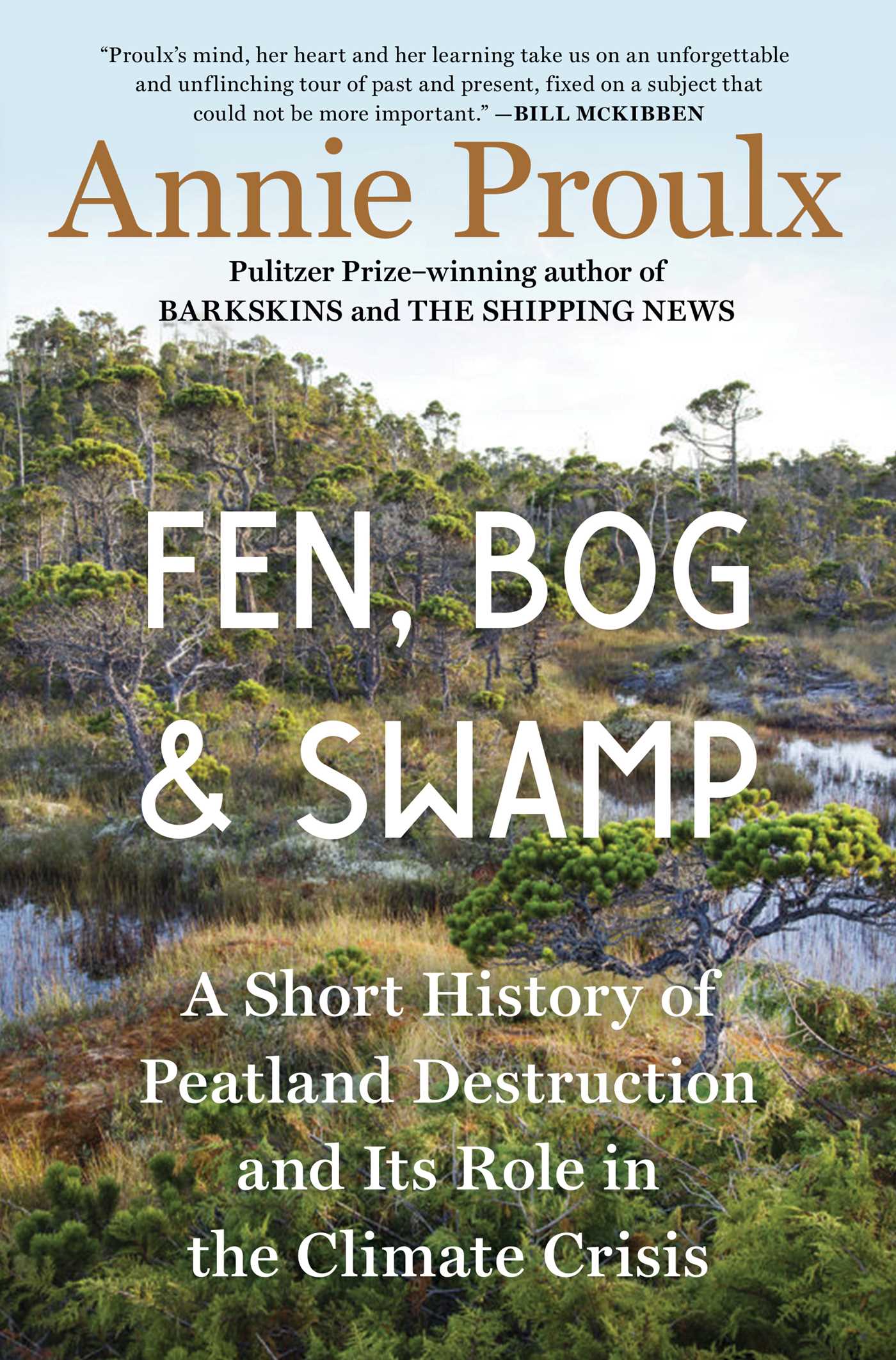
Fen, Bog and Swamp: A Short History of Peatland Destruction and Its Role in the Climate Crisis
by

68/99
Critics

44/99
Readers
n/a
Scholars
70/99
Rating
66/99
Volume
12/99
Rating
77/99
Volume
—
Sign in to add to your shelf, rate, or review this book.
About This Book
A lifelong acolyte of the natural world, Annie Proulx brings her witness and research to the subject of wetlands and the vitally important role they play in preserving the environment—by storing the carbon emissions that accelerate climate change. Fens, bogs, swamps, and marine estuaries are crucial to the earth's survival, and in four illuminating parts, Proulx documents their systemic destruction in pursuit of profit. In a vivid and revelatory journey through history, Proulx describes the fens of 16th-century England, Canada's Hudson Bay lowlands, Russia's Great Vasyugan Mire, and America's Okeefenokee National Wildlife Refuge. She introduces the early explorers who launched the destruction of the Amazon rainforest, and writes of the diseases spawned in the wetlands—the Ague, malaria, Marsh Fever. A sobering look at the degradation of wetlands over centuries and the serious ecological consequences, this is "an unforgettable and unflinching tour of past and present, fixed on a subject that could not be more important" (Bill McKibben). "A stark but beautifully written Silent Spring –style warning from one of our greatest novelists." — The Christian Science Monitor
Preview
Reviews
"Proulx's prose is, as ever, stunning ..."
"Proulx wants us to see the loss of wetlands in the same way – and to appreciate the beauty in these swampy and often stinking places."
"an information-packed short history that argues for their preservation and restoration ..."
"She provides a particularly good compact history of the draining of the fens of eastern England in an act pitting capitalists against working people and turning the vast wetlands, 'one of the world's richest environments,' to farmland—and, of course, releasing greenhouse gases to accompany those generated by the first factories of the Industrial Revolution ..."
"Proulx's concern for the future of life on earth as the planet warms is acute, while her inquiry into the watery places where peat is found balances alarm and despair with wonder and affirmation of nature's ability to rebound."
"With the exception of 'heroes of the bog'—sphagnum mosses—she does not write extensively about wetlands' flora and fauna."
Reader Reviews
0 reviewsSign in to write a review.
No reader reviews yet. Be the first!