Home › Books › How Medicine Works and When It Doesn't: Learning …
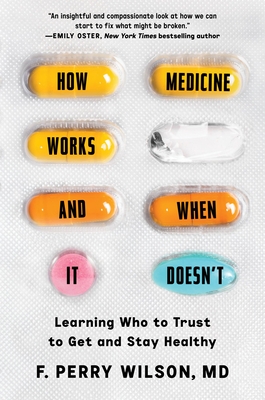
How Medicine Works and When It Doesn't: Learning Who to Trust to Get and Stay Healthy
by

35/99
Critics
48/99
Readers
n/a
Scholars
55/99
Rating
15/99
Volume
61/99
Rating
34/99
Volume
—
Sign in to add to your shelf, rate, or review this book.
About This Book
Blending personal anecdotes with hard science, an accomplished physician, researcher, and science communicator gives you the tools to avoid medical misinformation and take control of your health : "A brilliant step toward patients and physicians alike reclaiming a sense of confidence in a system that often feels overwhelming and mismanaged" (Gabby Bernstein, #1 New York Times bestselling author of The Universe Has Your Back ). We live in an age of medical miracles. Never in the history of humankind has so much talent and energy been harnessed to cure disease. So why does it feel like it's getting harder to live our healthiest lives? Why does it seem like "experts" can't agree on anything, and why do our interactions with medical professionals feel less personal, less honest, and less impactful than ever? Through stories from his own practice and historical case studies, Dr. F. Perry Wilson, a physician and researcher from the Yale School of Medicine, explains how and why the doctor-patient relationship has eroded in recent years and illuminates how profit-driven companies—from big Pharma to healthcare corporations—have corrupted what should have been medicine's golden age. By clarifying the realities of the medical field today, Dr. Wilson gives readers the tools they need to make informed decisions, from evaluating the validity of medical information online to helping caregivers advocate for their loved ones, in the doctor's office and with the insurance company. Dr. Wilson wants readers to understand medicine and medical science the way he does: as an imperfect and often frustrating field, but still the best option for getting well. To restore trust between patients, doctors, medicine, and science, we need to be honest, we need to know how to spot misinformation, and we need to avoid letting skepticism ferment into cynicism. For it is only by redefining what "good medicine" is—science that is well-researched, rational, safe, effective, and delivered with compassion, empathy, and trust—that the doctor-patient relationship can be truly healed.
Preview
Reviews
"a trenchant, empowering look at how to fix doctor-patient relationships."
"Wilson comes across as a compassionate, empathetic physician who wants people to be able to trust medicine, which is both an 'imperfect science and the single greatest force for good in the world today.'"
"Mixing hard data with personal anecdotes, Wilson sets out a convincing case ..."
Reader Reviews
0 reviewsSign in to write a review.
No reader reviews yet. Be the first!