Home › Books › How the Word Is Passed: A Reckoning with the Hist…
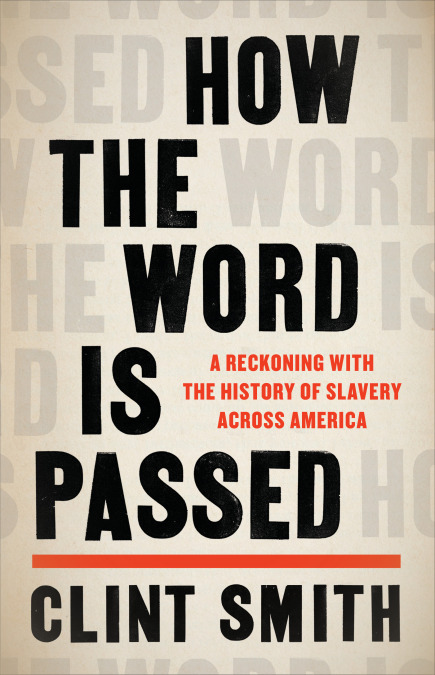
How the Word Is Passed: A Reckoning with the History of Slavery Across America
by

86/99
Critics' Rating Index
98/99
Readers' Rating Index
96/99
Scholars' Citation Index
98/99
Volume of Reviews
96/99
Volume of Reader Ratings
Sign in to add to your shelf, rate, or review this book.
About This Book
Poet and contributor to The Atlantic Clint Smith's revealing, contemporary portrait of America as a slave owning nation Beginning in his own hometown of New Orleans, Clint Smith leads the reader through an unforgettable tour of monuments and landmarks-those that are honest about the past and those that are not-that offer an intergenerational story of how slavery has been central in shaping our nation's collective history, and ourselves. It is the story of the Monticello Plantation in Virginia, the estate where Thomas Jefferson wrote letters espousing the urgent need for liberty while enslaving over 400 people on the premises. It is the story of the Whitney Plantation, one of the only former plantations devoted to preserving the experience of the enslaved people whose lives and work sustained it. It is the story of Angola Prison in Louisiana, a former plantation named for the country from which most of its enslaved people arrived and which has since become one of the most gruesome maximum-security prisons in the world. And it is the story of Blandford Cemetery, the final resting place of tens of thousands of Confederate soldiers. In a deeply researched and transporting exploration of the legacy of slavery and its imprint on centuries of American history, How the Word Is Passed illustrates how some of our country's most essential stories are hidden in plain view-whether in places we might drive by on our way to work, holidays such as Juneteenth, or entire neighborhoods—like downtown Manhattan—on which the brutal history of the trade in enslaved men, women and children has been deeply imprinted. Informed by scholarship and brought alive by the story of people living today, Clint Smith's debut work of nonfiction is a landmark work of reflection and insight that offers a new understanding of the hopeful role that memory and history can play in understanding our country.
Reviews
"Smith's purpose is never to put anyone on the spot."
"traces, in a sustained and pragmatic way, crucial sites in our historical narrative, and exposes the bitter experiences that, as Americans, we have long sought to suppress ..."
"Suffused with lyrical descriptions and incisive historical details, including Robert E."
"[a] powerful and diligent exploration of the realities and ongoing consequences of slavery in America."
"And yet, How the Word Is Passed succeeds in making the essential distinction between history and nostalgia."
"It has made the Treme, Washington and Harlem, with all the attainment and history each embodies, today's Seneca Village."
"Never getting lost in his story's many thickets, Smith confidently interleaves the history of American slavery with his subjects' varied relationships to the institution's evolving legacy ..."
"Some of the sites and histories that Smith revisits are well-known (for instance, Monticello and Sally Hemings's story); others, such as Louisiana's Angola prison/plantation, or the benefit Wall Street drew from slavery long after its abolition in New York, are refreshing new takes ..."
"In rich, evocative language, Smith synthesizes first hand research, textual sources, and interviews as he weaves a lyrical and precise tapestry of the truth of America's past that many would like to continue to hide ..."
"an eminently readable, thought-provoking volume, with a clear message to separate nostalgic fantasy and false narratives from history ..."
Preview
Reader Reviews
0 reviewsSign in to write a review.
No reader reviews yet. Be the first!