Home › Books › How to Be Avant-Garde: Modern Artists and the Que…
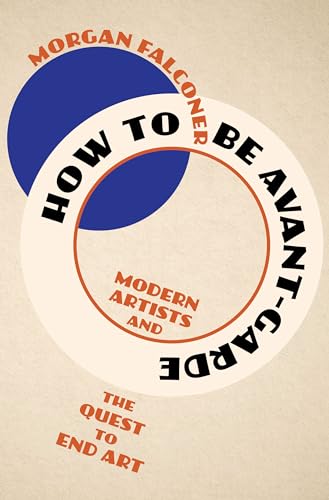
How to Be Avant-Garde: Modern Artists and the Quest to End Art
by


35/99
Critics
9/99
Readers
n/a
Scholars
55/99
Rating
15/99
Volume
5/99
Rating
13/99
Volume
—
Sign in to add to your shelf, rate, or review this book.
About This Book
The strange story of the twentieth-century artists who sought to destroy art by transforming it into the substance of everyday life. "Art has poisoned our life," proclaimed De Stijl cofounder Theo van Doesburg. Reacting to the tumultuous crises of the twentieth century, especially the horrors of World War I, bands of writers and artists explored different ways to end art by having it become part of how they lived. In dynamic engagement with these revolutionary groups, Morgan Falconer starts with Futurist founder Filippo Tommaso Marinetti, whose manifesto extolling speed, destruction, and modernity seeded avant-gardes across Europe. In turn, Dadaists Hugo Ball and Emmy Hennings sought to replace art with political cabaret, and the Surrealists tried to exchange it for tools to plumb the unconscious. Falconer next guides us through the Constructivists, De Stijl, and the Bauhaus, who explored how art could transmute into architecture and design. Finally, the Situationists swapped art for politics, with many of their ideas inspiring the 1968 Paris student protests. How to Be Avant-Garde brings forward these extraordinary radicals and their wild attempts to create utopia by destroying art.
Preview
Reviews
"Compelling capsule biographies of important figures."
"Falconer offers a vivid picture of the fervent efforts of artists questioning the meaning of art itself."
"Because How to Be Avant-Garde has no clear conceptual through line, however, context and detail are often missing."
Reader Reviews
0 reviewsSign in to write a review.
No reader reviews yet. Be the first!