Home › Books › If Then: How the Simulmatics Corporation Invented…
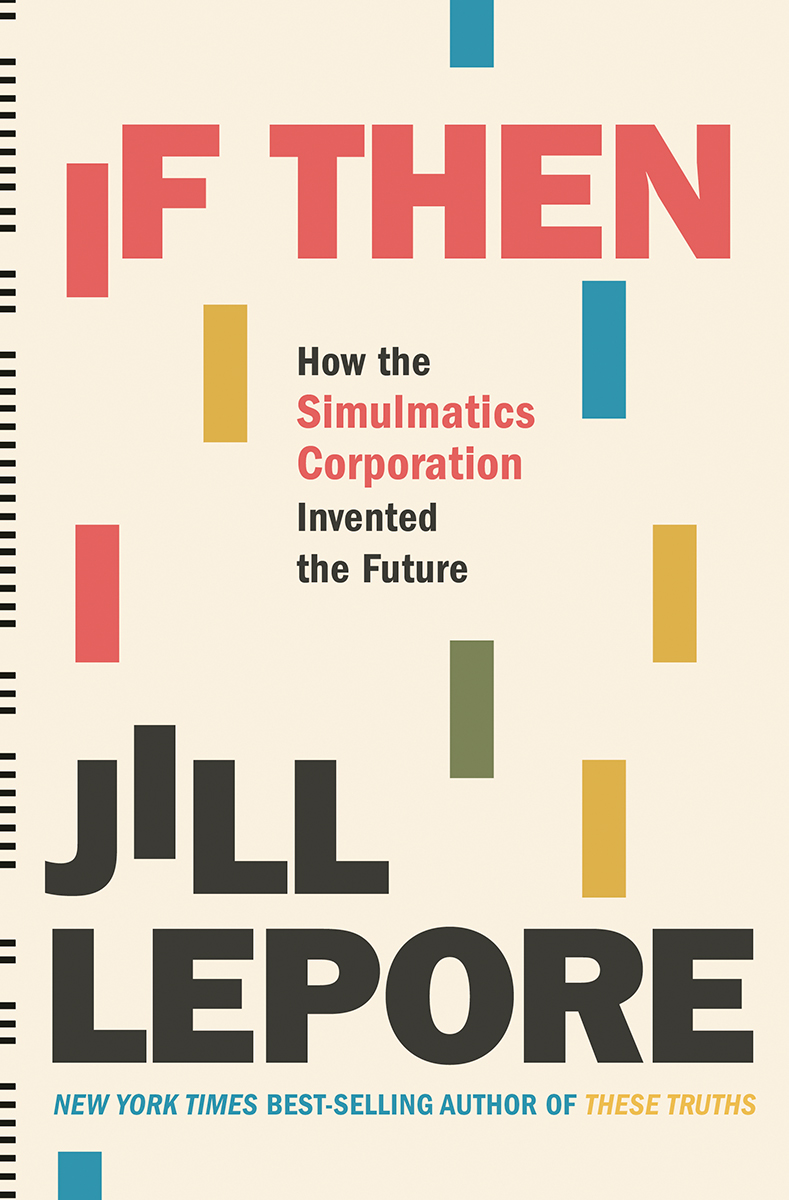
If Then: How the Simulmatics Corporation Invented the Future
by


54/99
Critics
42/99
Readers
n/a
Scholars
13/99
Rating
95/99
Volume
19/99
Rating
64/99
Volume
—
Sign in to add to your shelf, rate, or review this book.
About This Book
The Simulmatics Corporation, launched during the Cold War, mined data, targeted voters, manipulated consumers, destabilized politics, and disordered knowledge—decades before Facebook, Google, and Cambridge Analytica. Jill Lepore, best-selling author of These Truths, came across the company's papers in MIT's archives and set out to tell this forgotten history, the long-lost backstory to the methods, and the arrogance, of Silicon Valley. Founded in 1959 by some of the nation's leading social scientists—"the best and the brightest, fatally brilliant, Icaruses with wings of feathers and wax, flying to the sun"—Simulmatics proposed to predict and manipulate the future by way of the computer simulation of human behavior. In summers, with their wives and children in tow, the company's scientists met on the beach in Long Island under a geodesic, honeycombed dome, where they built a "People Machine" that aimed to model everything from buying a dishwasher to counterinsurgency to casting a vote. Deploying their "People Machine" from New York, Washington, Cambridge, and even Saigon, Simulmatics' clients included the John F. Kennedy presidential campaign, the New York Times, the Department of Defense, and dozens of major manufacturers: Simulmatics had a hand in everything from political races to the Vietnam War to the Johnson administration's ill-fated attempt to predict race riots. The company's collapse was almost as rapid as its ascent, a collapse that involved failed marriages, a suspicious death, and bankruptcy. Exposed for false claims, and even accused of war crimes, it closed its doors in 1970 and all but vanished. Until Lepore came across the records of its remains. The scientists of Simulmatics believed they had invented "the A-bomb of the social sciences." They did not predict that it would take decades to detonate, like a long-buried grenade. But, in the early years of the twenty-first century, that bomb did detonate, creating a world in which corporations collect data and model behavior and target messages about the most ordinary of decisions, leaving people all over the world, long before the global pandemic, crushed by feelings of helplessness. This history has a past; If Then is its cautionary tale.
Preview
Reviews
"Lepore does not demonize the company's exuberant but flawed founders, among them Ithiel de Sola Pool, the MIT scholar whose theories would later be heartily embraced by Silicon Valley."
"A fascinating, expertly guided exploration of a little-known corner of the recent past."
"Deeply researched, written with elegance and passion, If Then gives a vivid picture of [Simulatics' executives'] lives, including their often miserable wives, suffering 'the bad bargains of the middle-class marriages of the 1950s.'"
"What Lepore's rich account unearths is the impetus behind the project, a set of attitudes that continue to drive psychographic microtargeting efforts today ..."
"What makes If Then/em> so powerful is the implicit analogy between the '60s and today --- not just because of social upheavals, but because ordinary citizens are being manipulated now, as they were then, by the technology that affords its overseers the power of 'perfect persuasion.'"
"Scholars of American history and technology will appreciate the extensive research that went into this book, while general readers will be swept up by the novelistic scope of the story."
Reader Reviews
0 reviewsSign in to write a review.
No reader reviews yet. Be the first!