Home › Books › Proustian Uncertainties: On Reading and Rereading…
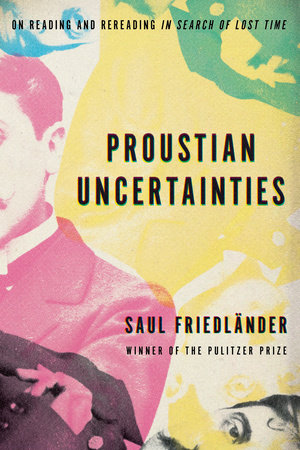
Proustian Uncertainties: On Reading and Rereading In Search of Lost Time
by


57/99
Critics

3/99
Readers
n/a
Scholars
62/99
Rating
52/99
Volume
3/99
Rating
3/99
Volume
—
Sign in to add to your shelf, rate, or review this book.
About This Book
A Pulitzer Prize-winning historian revisits Marcel Proust's masterpiece in this essay on literature and memory, exploring the question of identity--that of the novel's narrator and Proust's own. This engaging reexamination of In Search of Lost Time considers how the narrator defines himself, how this compares to what we know of Proust himself, and what the significance is of these various points of commonality and divergence. We know, for example, that the author did not hide his homosexuality, but the narrator did. Why the difference? We know that the narrator tried to marginalize his part-Jewish background. Does this reflect the author's position, and how does the narrator handle what he tries, but does not manage, to dismiss? These are major questions raised by the text and reflected in the text, to which the author's life doesn't give obvious answers. The narrator's reflections on time, on death, on memory, and on love are as many paths leading to the image of self that he projects. In Proustian Uncertainties, Saul Friedlander draws on his personal experience from a life spent investigating the ties between history and memory to offer a fresh perspective on the seminal work.
Preview
Reviews
"Indeed, the pleasure of the book comes from its old-fashioned, amateur quality, the author unspooling thoughts and venturing theories collected over many years about a book he clearly loves."
"Proust fans will enjoy these appreciative, personal peregrinations through 'one of the most important novels ever written.'"
"Yet the narrator, as he insists, is not just an 'observer' but a 'dreamer.' Mr."
"Many of his sentences in Proustian Uncertainties are ungainly, in contrast with the elegant directness of When Memory Comes (first written in French and beautifully translated by Helen R."
"In this brief, thought-provoking examination that is likely to appeal most to literary scholars he focuses on the 'Narrator's strange, contradictory statements' and how the Narrator functions as Proust's 'alter ego.' ..."
Reader Reviews
0 reviewsSign in to write a review.
No reader reviews yet. Be the first!