Home › Books › The Anxious Generation: How the Great Rewiring of…
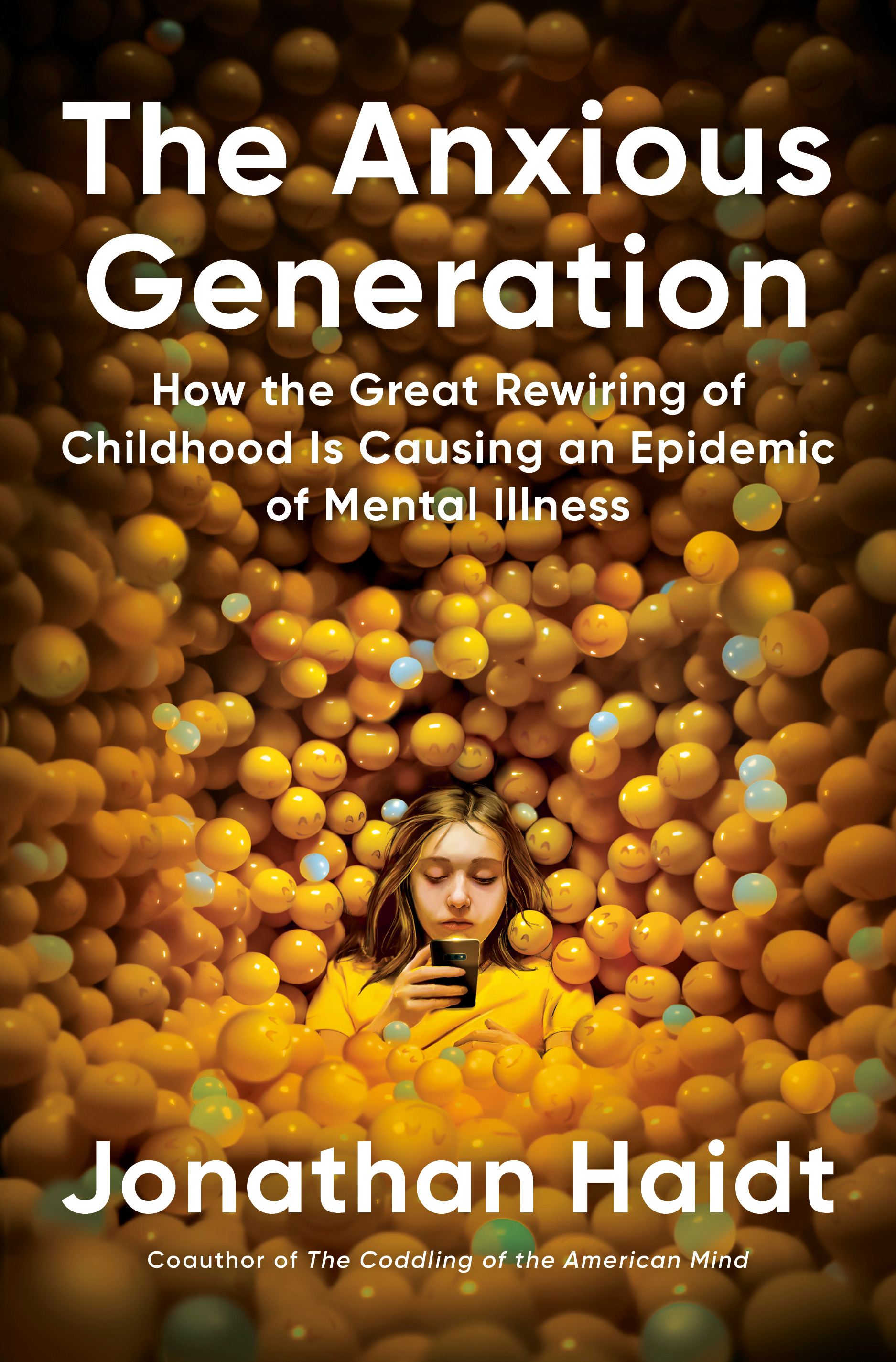
The Anxious Generation: How the Great Rewiring of Childhood Caused an Epidemic of Mental Illness
by


49/99
Critics' Rating Index
89/99
Readers' Rating Index
99/99
Scholars' Citation Index
66/99
Volume of Reviews
98/99
Volume of Reader Ratings
Sign in to add to your shelf, rate, or review this book.
About This Book
From New York Times bestselling coauthor of The Coddling of the American Mind, an essential investigation into the collapse of youth mental health—and a plan for a healthier, freer childhood After more than a decade of stability or improvement, the mental health of adolescents plunged in the early 2010s. Rates of depression, anxiety, self-harm, and suicide rose sharply, more than doubling on many measures. Why? In The Anxious Generation, social psychologist Jonathan Haidt lays out the facts about the epidemic of teen mental illness that hit many countries at the same time. He then investigates the nature of childhood, including why children need play and independent exploration to mature into competent, thriving adults. Haidt shows how the play-based childhood began to decline in the 1980s, and how it was finally wiped out by the arrival of the phone-based childhood in the early 2010s. He presents more than a dozen mechanisms by which this great rewiring of childhood has interfered with children's social and neurological development, covering everything from sleep deprivation to attention fragmentation, addiction, loneliness, social contagion, social comparison, and perfectionism. He explains why social media damages girls more than boys and why boys have been withdrawing from the real world into the virtual world, with disastrous consequences for themselves, their families, and their societies. Most important, Haidt issues a clear call to action. He diagnoses the collective action problems that trap us, and then proposes four simple rules that might set us free. He describes steps that parents, teachers, schools, tech companies, and governments can take to end the epidemic of mental illness and restore a more humane childhood. Haidt has spent his career speaking truth backed by data in the most difficult landscapes—communities polarized by politics and religion, campuses battling culture wars, and now the public health emergency faced by Gen Z. We cannot afford to ignore his findings about protecting our children—and ourselves—from the psychological damage of a phone-based life.
Reviews
"Of all the likely causes — existential or economic gloom, something in the water — this seems the frontrunner."
"A bitter read but also a galvanizing one ..."
"Nonetheless an urgent and essential read, and it ought to become a foundational text for the growing movement to keep smartphones out of schools, and young children off social media."
"This dialectic is compelling, but the moral matrix of the problem — and the scientific foundations — are more complex."
"He acknowledges this, and tries to get around the problem with the sheer amount of correlational evidence he pools together ..."
"The Anxious Generation is, to a considerable extent, a reiteration and expansion of Coddling."
Preview
Reader Reviews
0 reviewsSign in to write a review.
No reader reviews yet. Be the first!