Home › Books › The Freaks Came Out to Write: The Definitive Hist…
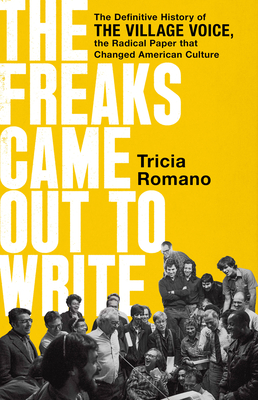
The Freaks Came Out to Write: The Definitive History of the Village Voice, the Radical Paper That Changed American Culture
by

88/99
Critics' Rating Index
76/99
Readers' Rating Index
n/a
Scholars' Citation Index
97/99
Volume of Reviews
57/99
Volume of Reader Ratings
Sign in to add to your shelf, rate, or review this book.
About This Book
A rollicking history of America's most iconic weekly newspaper told through the voices of its legendary writers, editors, and photographers. You either were there or you wanted to be. A defining New York City institution co-founded by Norman Mailer, The Village Voice was the first newspaper to cover hip-hop, the avant-garde art scene, and Off-Broadway with gravitas. It reported on the AIDS crisis with urgency and seriousness when other papers dismissed it as a gay disease. In 1979, the Voice 's Wayne Barrett uncovered Donald Trump as a corrupt con artist before anyone else was paying attention. It invented new forms of criticism and storytelling and revolutionized journalism, spawning hundreds of copycats. With more than 200 interviews, including two-time Pulitzer Prize winner, Colson Whitehead, cultural critic Greg Tate, gossip columnist Michael Musto, and feminist writers Vivian Gornick and Susan Brownmiller, former Voice writer Tricia Romano pays homage to the paper that saved NYC landmarks from destruction and exposed corrupt landlords and judges. With interviews featuring post-punk band, Blondie, sportscaster Bob Costas, and drummer Max Weinberg, of Bruce Springsteen's E Street Band, in this definitive oral history, Romano tells the story of journalism, New York City and American culture—and the most famous alt-weekly of all time.
Reviews
"Most chapters offer an inside history of familiar events."
"An oral history that's as animated as a packed express train rollicking through the Manhattan underground."
"She keeps her narrative moving while sporadically highlighting crucial, but lesser-known figures ..."
"The collage of interviews in The Freaks Came Out to Write extends from the paper's idealistic beginnings to its tawdry decline ..."
"At its best it sounds uncannily like the paper itself as it was experienced throughout its glory years and long after ..."
"An exceptional resource in which readers get a real flavor of the exciting and troubling times throughout the Village Voice's run and the opportunity to draw their own conclusions about its rise (and fall in 2017)."
"The chorus evokes what now feels like the quaint bohemian radicalism of the 1960s, '70s and '80s."
"The tone of The Freaks Came Out to Write is a symphonic kind of anarchy."
"It's also fun as hell to read."
"Romano lucidly tracks the changes of ownership and the ungodly number of editors in chief ..."
Preview
Reader Reviews
0 reviewsSign in to write a review.
No reader reviews yet. Be the first!