Home › Books › The Louvre: The Many Lives of the World's Most Fa…
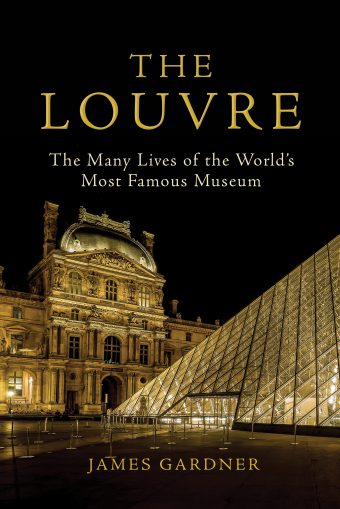
The Louvre: The Many Lives of the World's Most Famous Museum
by


61/99
Critics' Rating Index
37/99
Readers' Rating Index
n/a
Scholars' Citation Index
51/99
Volume of Reviews
38/99
Volume of Reader Ratings
Sign in to add to your shelf, rate, or review this book.
About This Book
Some nine million people from all over the world flock to the Louvre each year to enjoy its incomparable art collection. Yet few of them are aware of the remarkable history of that place and of the buildings themselves—a fascinating story that historian James Gardner elegantly chronicles in the first full-length history of the Louvre in English. More than 7,000 years ago, men and women camped on a spot called Le Louvre for reasons unknown; a clay quarry and a vineyard supported a society there in the first centuries AD. A thousand years later, King Philippe Auguste of France constructed a fortress there in 1191, just outside the walls of a city far smaller than the Paris we know today. Intended to protect the capital against English soldiers stationed in Normandy, the fortress became a royal residence under Charles V two centuries later, and then the monarchy's principal residence under the great Renaissance king François I in 1546. It remained so until 1682 when Louis XIV moved his entire court to Versailles. Thereafter the fortunes of the Louvre languished until the tumultuous days of the French Revolution when, during the Reign of Terror in 1793, it first opened its doors to display the nation's treasures. Ever since—through the Napoleonic era, the Commune, two World Wars, to the present—the Louvre has been a witness to French history, and expanded to become home to a legendary collection, including such masterpieces as the Mona Lisa and Venus de Milo, whose often-complicated and mysterious origins form a spectacular narrative that rivals the building's grand stature.
Reviews
"But the surprises don't stop there ..."
"A richly detailed journey through a palimpsest of the past."
"In elegant prose, Gardner describes how over the next 200 years the Louvre endured constant evolution and construction as its reputation as a leading repository for art treasures grew and it became the world's most famous museum ..."
"Recommended for readers interested in the history of France, the history of architecture, and museology."
"Think of reading this book as the full experience you are temporarily denied today, or may never have had the energy to undertake ..."
Preview
Reader Reviews
0 reviewsSign in to write a review.
No reader reviews yet. Be the first!