Home › Books › The Pattern Seekers: How Autism Drives Human Inve…
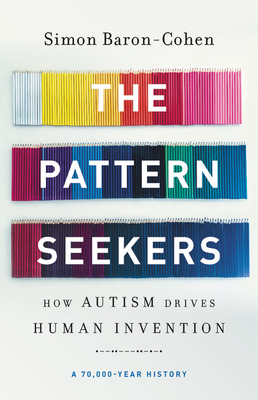
The Pattern Seekers: How Autism Drives Human Invention
by


5/99
Critics' Rating Index
31/99
Readers' Rating Index

95/99
Scholars' Citation Index
66/99
Volume of Reviews
48/99
Volume of Reader Ratings
Sign in to add to your shelf, rate, or review this book.
About This Book
In The Pattern Seekers, Cambridge University psychologist Simon Baron-Cohen makes a case that autism is as crucial to our creative and cultural history as the mastery of fire. Indeed, Baron-Cohen argues that autistic people have played a key role in human progress for seventy thousand years, from the first tools to the digital revolution. How? Because the same genes that cause autism enable the pattern seeking that is essential to our species's inventiveness. However, these abilities exact a great cost on autistic people, including social and often medical challenges, so Baron-Cohen calls on us to support and celebrate autistic people in both their disabilities and their triumphs. Ultimately, The Pattern Seekers isn't just a new theory of human civilization, but asks people to consider anew how society treats those who think differently.
Reviews
"Nonetheless, his work buttresses the case that aspects of autism can be positive, and that thoughtful guidance can channel some with that diagnosis into productive and meaningful work."
"It's at least possible."
"His central argument, however, is that autistic people have been 'drivers of the evolution of science, technology, art' and that if we are to progress as a species, we must do more to encourage and benefit from their unique way of thinking."
"The term should be reserved only for diagnosis when people are struggling to function, he explains ..."
"A thoughtful argument that creativity shares many of the same traits as autism ..."
"The examples are intriguing ..."
Preview
Reader Reviews
0 reviewsSign in to write a review.
No reader reviews yet. Be the first!