Home › Books › Tripping on Utopia: Margaret Mead, the Cold War, …
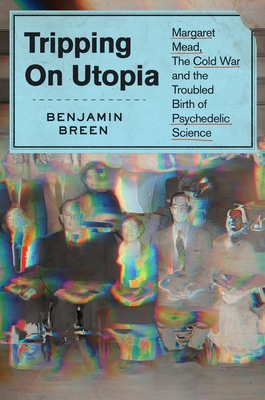
Tripping on Utopia: Margaret Mead, the Cold War, and the Troubled Birth of Psychedelic Science
by

96/99
Critics' Rating Index
35/99
Readers' Rating Index
n/a
Scholars' Citation Index
66/99
Volume of Reviews
52/99
Volume of Reader Ratings
Sign in to add to your shelf, rate, or review this book.
About This Book
A bold and brilliant revisionist take on the history of psychedelics in the twentieth century, illuminating how a culture of experimental drugs shaped the Cold War and the birth of Silicon Valley. "It was not the Baby Boomers who ushered in the first era of widespread drug experimentation. It was their parents." Far from the repressed traditionalists they are often painted as, the generation that survived the second World War emerged with a profoundly ambitious sense of social experimentation. In the '40s and '50s, transformative drugs rapidly entered mainstream culture, where they were not only legal, but openly celebrated. American physician John C. Lilly infamously dosed dolphins (and himself) with LSD in a NASA-funded effort to teach dolphins to talk. A tripping Cary Grant mumbled into a Dictaphone about Hegel as astronaut John Glenn returned to Earth. At the center of this revolution were the pioneering anthropologists—and star-crossed lovers—Margaret Mead and Gregory Bateson. Convinced the world was headed toward certain disaster, Mead and Bateson made it their life's mission to reshape humanity through a new science of consciousness expansion, but soon found themselves at odds with the government bodies who funded their work, whose intentions were less than pure. Mead and Bateson's partnership unlocks an untold chapter in the history of the twentieth century, linking drug researchers with CIA agents, outsider sexologists, and the founders of the Information Age. As we follow Mead and Bateson's fractured love affair from the malarial jungles of New Guinea to the temples of Bali, from the espionage of WWII to the scientific revolutions of the Cold War, a new origin story for psychedelic science emerges.
Reviews
"Lively and engrossing ..."
"Breen is an engaging writer invigorated by his topic, and to synthesize so much information is an accomplishment."
"Breen's smart, entertaining narrative brings this history vividly to life."
"Breen blends fleet-footed biography with an accessible analysis of mid-20th-century research into 'psychedelic' experiences ..."
"Breen handles his complex and frequently bizarre material with skill and sobriety."
"An alternate history of psychedelic drugs before their adoption by the counterculture."
Preview
Reader Reviews
0 reviewsSign in to write a review.
No reader reviews yet. Be the first!