Home › Books › Unforgetting: A Memoir of Family, Migration, Gang…
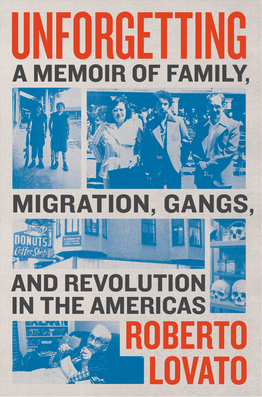
Unforgetting: A Memoir of Family, Migration, Gangs, and the Revolution in the Americas
by

89/99
Critics' Rating Index
87/99
Readers' Rating Index
86/99
Scholars' Citation Index
89/99
Volume of Reviews
43/99
Volume of Reader Ratings
Sign in to add to your shelf, rate, or review this book.
About This Book
A timely and no-holds-barred tale of gang life, guerilla warfare, immigration, and intergenerational trauma, Robert Lovato's memoir and cultural critique reflects on his multifaceted life and examines many of the self-serving myths underlying modern American culture.The child of Salvadoran immigrants, Roberto Lovato grew up in 1970s California. Joining a gang in his teens, he witnessed a friend take a bullet to the face in a coke deal gone bad and survived his own shooting. He eventually traded the violence of the streets for wartime El Salvador where he joined the guerilla movement against its corrupt, fraudulent military government. As a child. Roberto endured beatings and humiliations driven by his father Ramón's anger—a rage rooted in his own childhood in El Salvador. Raised in extreme poverty in the countryside during the time of La Matanza—in which tens of thousands of indigenous peoples were killed in the span of a few months—young Ramón also spent time in a brothel and as the leader of a small band of thieves on the streets of San Salvador. Roberto looks back to the pain of his father's youth and examines both how he survived a life straddling intersecting underworlds of family secrets, traumatic silence, and criminal black-market goods and guns, and how these forces impacted his father's life and subsequently Roberto's own. Returning from El Salvador, Roberto channeled his own pain into activism and journalism, focusing his attention on how intergenerational trauma affects individual lives and societies. In Becoming Américan, he makes the political personal, interweaving his story and that of his father with wider social issues, including gang life—notably that of MS-13—and the immigration crisis, to reveal the profound ties between El Salvador and the United States that have fueled the rise of both of these issues.
Reviews
"Lovato's journalism, then, is best understood as an expression of this process of unforgetting, and his work is a case study in the power that comes from a reporter deciding to write stories that speak to his own inner turmoil rather than adopting the studied dispassion typically ascribed to the profession ..."
"Traversing history once more, Unforgetting offers portraits of life after the truce ending the civil war, only to have violence take a new turn in the early 1990s."
"But it's also a call for justice and change."
"A provocative, revealing work of journalism that explains gang behavior but does not idealize it."
"The book is not particularly easy to read, in part because of the sometimes-violent content, but also because Lovato's work moves dizzyingly back and forth in time and place."
"...groundbreaking ..."
"This mix of memoir and history is an essential chronicle, solidly researched and carefully sourced, and enriched with some poetry and plenty of hard-won wisdom."
"The book illuminates the depths of violence that have shaped El Salvador ..."
"Lovato delivers an intimate, gripping portrait of El Salvador's agony."
Preview
Reader Reviews
0 reviewsSign in to write a review.
No reader reviews yet. Be the first!